The Problem:
Slip-critical structural connections rely on bolt pretension to transfer load through friction. Achieving and verifying the required pretension is essential to joint performance.
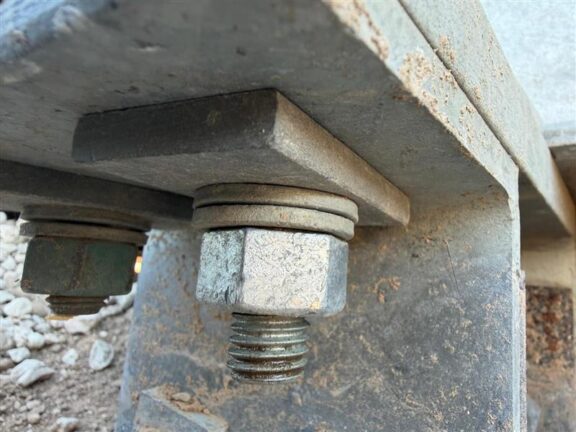
During field installation, the hardware did not exhibit the expected tension‑indicating behavior. This raised uncertainty regarding whether the required pretension had been achieved. Visual indicators alone were insufficient to provide defensible verification, and assumptions were not acceptable for a slip-critical application.
Matrix Engineering Consultants was engaged to develop a standards‑based method to verify bolt pretension in the field.
Engineering Approach:
Engineering the Right Answer
Matrix applied a structured, engineering-first approach grounded in recognized industry standards.
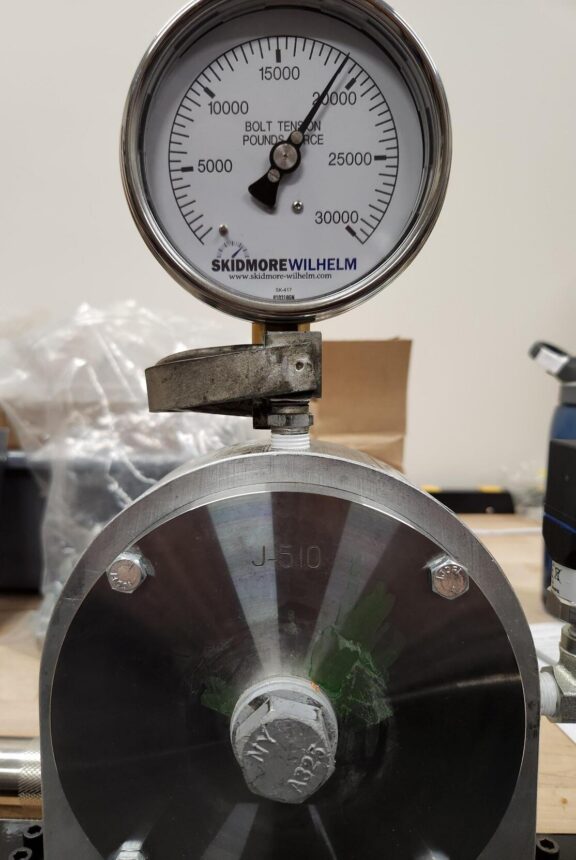
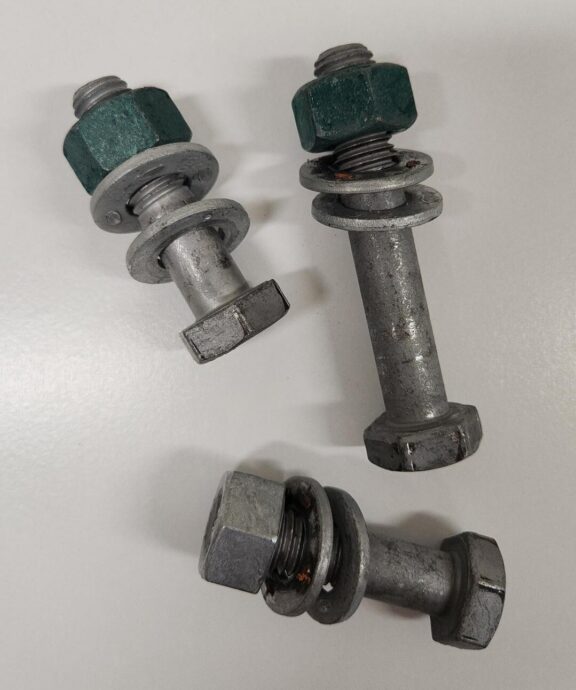
Laboratory testing was conducted using RCSC Specification for Structural Joints Using High‑Strength Bolts, Section 10 (Arbitration Procedure). Testing was performed across multiple hardware configurations to evaluate variability and confirm applicability beyond a single installation condition.
Calibrated bolt‑tension measurement systems and precision torque instrumentation were used to directly measure achieved pretension. A torque audit acceptance value was established based on measured performance rather than assumed torque–tension relationships. Outliers were excluded, and representative results were averaged in accordance with the arbitration methodology. The resulting acceptance threshold aligned with recognized industry practice.
Translating Laboratory Data into Field Simplicity
The solution was developed with field implementation in mind.
Rather than specifying multiple acceptance thresholds, Matrix recommended a single torque audit value applicable across the tested hardware configurations. This approach simplified inspection, reduced the potential for misinterpretation, and maintained appropriate engineering conservatism.
Environmental and installation considerations were documented to support repeatability and consistency during field verification.
Results and Impact:
The Result
Matrix delivered a laboratory-validated torque audit acceptance value supported by a repeatable field verification procedure. Documentation was provided in alignment with recognized industry standards.
The outcome included:
- A laboratory-validated torque audit criterion
- A repeatable field verification process
- Supporting documentation aligned with industry standards
- Increased confidence in slip-critical joint performance
The solution provided a defensible basis for verifying bolt pretension and allowed construction activities to proceed with confidence.
Engineering Confidence Where It Matters Most
Slip‑critical connections require verification grounded in engineering analysis and data. Matrix Engineering Consultants supports the design, evaluation, and verification of critical bolted connections through its Bolted Joint Consulting services, combining standards‑based testing with practical field considerations.
To learn more about how Matrix can support your application or to discuss a specific bolted joint challenge, please contact our engineering team.
Looking for a collaborative partner?
Whether you’re innovating from the ground up or enhancing an existing product, Matrix Engineering is here to guide you. Our team excels in providing dynamic solutions for new developments, improvements, and complex challenges across various industries.