Assembly, Service, and Field Issue Resolution Services
Assembly, service, and field-related issues often reveal gaps between design intent and real-world conditions. Our engineering-led resolution services focus on understanding how bolted joints behave during assembly, maintenance, and operation—then applying targeted improvements that restore reliability and prevent repeat issues.
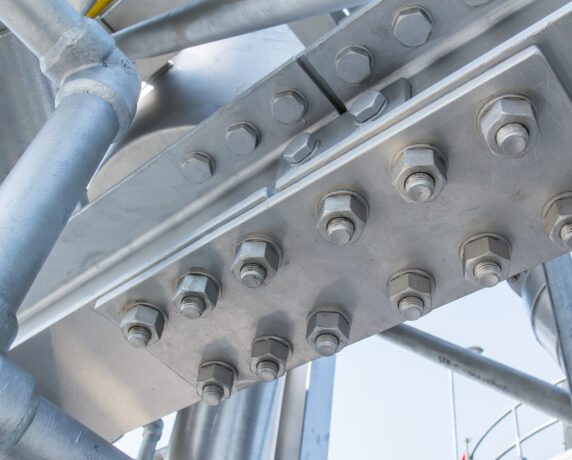
A Systems-Level Approach to Assembly and Field Issues
Assembly and service challenges are rarely isolated to a single fastener. They are typically the result of interactions between joint design, tooling, access, procedures, and operating environment. We evaluate these factors together to identify root cause and develop durable solutions.
- Requirements and Use-Case Review
We begin by understanding how the joint is assembled, serviced, and used in the field. This includes reviewing torque requirements, service intervals, access constraints, and environmental exposure. - Joint Behavior Assessment
We evaluate how preload is achieved and maintained over time, including sensitivity to assembly variability, vibration, thermal cycling, and rework. - Assembly Process Evaluation
Tooling, torque methods, sequence, and operator interaction are reviewed to identify sources of inconsistency or unintended preload loss. - Service and Maintenance Considerations
We assess how maintenance activities affect joint integrity, including removal and reinstallation practices, accessibility, and potential for fastener damage. - Corrective Action Development
Findings are translated into practical improvements—whether updates to procedures, tooling, joint design details, or validation practices.
Built for Real-World Conditions
Assembly and field issues often emerge when products leave controlled environments. Our work reflects the realities of production floors, service bays, and operating environments where variability is unavoidable.
Industry Applications
Off-Highway · Industrial Equipment · Robotics · Specialty / Defense
We support products operating where vibration, shock, temperature extremes, and limited service access are common.
Duty Cycle and Environment
We consider actual load cases, vibration profiles, and environmental exposure—not just nominal design assumptions.
Assembly Variability
We account for differences in tools, operators, and service conditions to improve robustness and repeatability.
Validation and Verification
Where appropriate, we recommend targeted validation steps to confirm improvements under realistic conditions.
How we model your joint
Clear Procedures
Improved assembly and service instructions that reduce ambiguity and variation.
Tooling and Method Alignment
Recommendations for torque methods, tools, and controls that improve preload consistency.
Joint Design Feedback
Insights that feed back into bolted joint design, analysis, and validation efforts.
Service-Friendly Features
Consideration of access, reusability, and fastener protection during maintenance.
Documentation and Traceability
Clear documentation of changes, assumptions, and validation outcomes.
Lifecycle Support
Solutions that support reliable performance through repeated service events.
FAQs
Can you support issues discovered after products are in the field?
Yes. We routinely support field-related fastener and joint issues, including those discovered during service, warranty investigations, or operational use.
Do you evaluate assembly tools and torque methods? handle friction variation?
Yes. Tool capability, torque strategy, and operator interaction are common contributors to joint performance issues.
Can findings be fed back into future designs?
Absolutely. Assembly and field insights are often used to strengthen future bolted joint design and validation practices.
Next steps
If assembly challenges, service issues, or field failures are affecting joint reliability, we can help identify root cause and implement practical solutions. These services integrate closely with our bolted joint consulting efforts to improve performance across the product lifecycle.