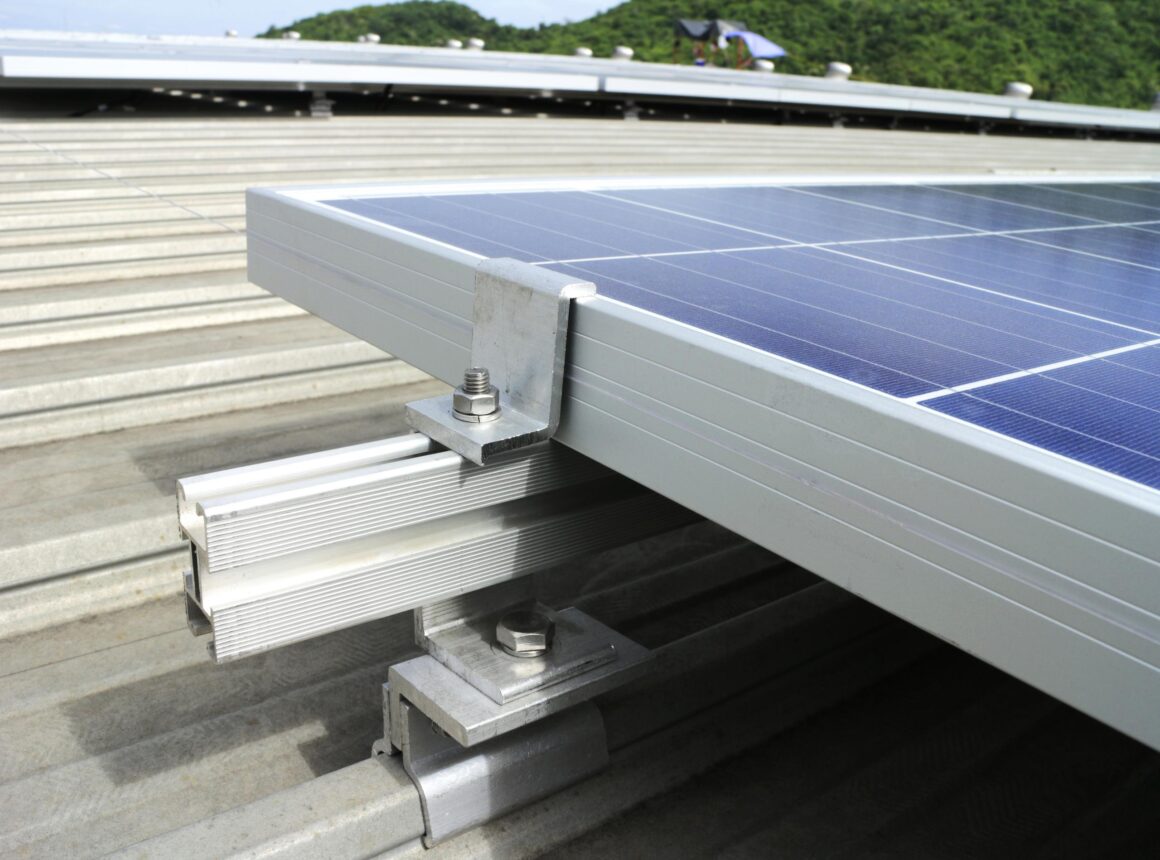
In this article, a DOE-SETO funded research team — including Jon Ness, PE of Matrix Engineering Consultants alongside investigators from Lawrence Berkeley National Laboratory, UC Berkeley, and NREL — reports findings from a systematic audit of bolted joint designs on display at the RE+ 2022 trade show in Anaheim, California. What they found was not a collection of edge cases. It was a pattern of misspecification serious enough to represent a structural reliability problem across the industry.
The solar PV industry deploys fastened joints at enormous scale, under dynamic wind loading, with life-safety consequences if those joints fail. The engineering practices that govern fastener selection and joint design in structural steel and transportation have been refined over a century of field experience and codified into widely adopted standards. That body of knowledge largely does not exist yet in solar PV — and the RE+ show floor made that gap visible.
What the article covers:
- Scale of the problem — The research team examined 19 different racking products and 92 bolted joint designs at RE+ ’22. Of those 92 joints, 83 areas of concern were identified, many classified as serious in terms of potential financial loss and life-safety risk. Failure effects ranged from individual component detachment to cascading structural collapse. This was not a fringe sample — it was a representative cross-section of what the industry was actively selling and deploying.
- The lock washer myth — Helical spring washers were found in widespread use across tracker and racking module attachments and inter-rack connections. The belief behind their use — that they lock the nut to the joint and prevent loosening — is not supported by the evidence. Transportation industry testing and field experience have shown that lock washers do not prevent self-loosening and in many cases accelerate it. They have been effectively eliminated from automotive applications for this reason. Alternatives with demonstrated performance, including thread lockers and wedge lock washers, are available and widely used in rail and automotive but remain underutilized in solar.
- Nylon lock nut risks — Nylon insert prevailing torque nuts were also found in widespread use. While inexpensive and effective at preventing a fastener from falling out entirely, they are not effective at keeping a bolted joint tight under load. Beyond that limitation, nylon degrades under UV exposure and becomes brittle at low temperatures, making cold-weather installation problematic and reducing long-term effectiveness. Galling during assembly is an additional risk, particularly when nylon lock nuts are mated with stainless steel bolts without lubrication. The article provides specific guidance on specifying UV-resistant nylon and requiring pre-applied lubricant when nylon insert nuts must be used.
- Square U-bolt fatigue fracture risk — At least five manufacturers were found using square-corner u-bolts for inter-rack and tracker connections. Square u-bolts are a cost-effective joining solution, but the sharp bend radius creates stress concentrations that put the joint at risk of fatigue fracture — particularly when the bolt diameter necks at the bend during forming, or when tool marks are introduced. Heat treatment sequencing compounds the problem: u-bolts that are heat treated before bending rather than after can become brittle at the bent areas and fracture during assembly or in service. The article explains the tight dimensional tolerances required between the u-bolt corner radius and the structural tube outside radius, and why achieving reliable performance from square u-bolts demands the kind of process control that is standard in automotive but not yet common in solar.
The research team framing this as “just the beginning” is deliberate. The RE+ audit was a data collection exercise, not a comprehensive engineering review. The same team is producing guidance materials and training as part of the broader DOE-SETO research program. The findings published here represent the leading edge of a longer effort to bring solar PV fastener and joint engineering up to the standard that the structural demands of these systems require.
Looking for a collaborative partner?
Whether you’re innovating from the ground up or enhancing an existing product, Matrix Engineering is here to guide you. Our team excels in providing dynamic solutions for new developments, improvements, and complex challenges across various industries.